
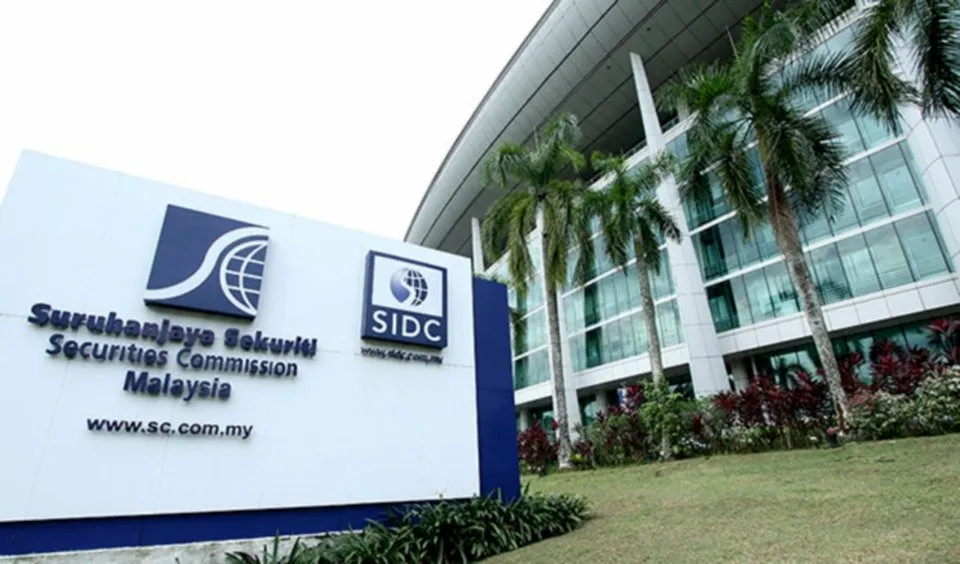
Malaysia's Single Family Office (SFO) Incentive Scheme has attracted an indicative RM20.8 billion in assets under management as at end-September, more than 10 times its original RM2 billion target.
Securities Commission Malaysia (SC) executive director Shahrul Amry Abd Malek said the figure reflected growing interest from local and foreign families, including Malaysians bringing their wealth home, since the scheme's launch in September 2024.
"The tax incentive is conditional on families investing, spending and hiring locally, because we want families who operate here, not structures that are simply registered here," he said in his keynote address at the Family Office Summit Malaysia.
An SFO is a private entity set up to manage the wealth and investments of one wealthy family.
Introduced under the Forest City Special Financial Zone initiative in Johor, the scheme offers qualifying family offices a zero per cent tax rate for up to 20 years, subject to local investment, employment and spending requirements.
Shahrul said the scheme was expected to bring at least RM200 million in fresh investments to the capital market while generating spillover opportunities for banks, fund managers, investment advisers, trustees, lawyers and tax advisers.
To attract more families, the SC is introducing greater flexibility through the Multi-Family Office (MFO) model announced in the 2027 Budget.
Under the model, families can appoint an SC-licensed fund manager directly instead of establishing and operating a separate management company with its own staffing, governance, accounting and audit requirements.
This would allow families to access professional investment management while retaining their own investment mandates, with the flexibility to operate through an MFO, an SFO or a combination of both as their needs and portfolios evolve.
However, Shahrul said the changes would not dilute the scheme's substance requirements, with each Single Family Office Vehicle still required to meet the conditions to qualify for the zero per cent tax rate on all income.
The SC is also expanding the scope of qualifying local operating expenditure to include contributions to the Iskandar Regional Development Authority's Social Fund, which supports education, skills and community programmes in Johor.
Newly approved families will also be required to apply for their first certification within 18 months of receiving conditional approval to ensure approvals translate into operational family offices.
Shahrul said Malaysia's appeal as a private capital destination was supported by its strategic location in ASEAN, skilled workforce, established common law system, leadership in Islamic finance and long-term residence pathways for family office principals, their families and supporting professionals.
The country's capital market, which grew to RM4.3 trillion last year, has since expanded to RM4.5 trillion, while Malaysia remains the world's largest sukuk market.
Under the Capital Market Masterplan 2026–2030, the SC aims to position Malaysia as a regional hub for companies seeking capital and investors looking to establish a base.
Shahrul said the country's micro, small and medium enterprises, which contribute close to 40 per cent of gross domestic product, offered significant investment opportunities for family offices.
With an estimated RM268 billion financing gap in the segment, family offices could complement traditional financing sources by providing patient and flexible capital to businesses seeking to expand.
He added that co-investment platforms such as the Malaysia Co-Investment Fund had helped mobilise RM7.7 billion for more than 11,500 businesses, with public funds investing alongside private investors.
Family offices could participate directly or through venture capital, private equity and private credit investments, including Shariah-compliant options.
There were also opportunities among an estimated 18,000 mid-tier companies that could potentially develop into listed companies, he said.
Beyond domestic investment opportunities, Malaysia's partnership with Hong Kong was expected to widen access to regional capital markets.
Under a memorandum of understanding with Hong Kong's Securities and Futures Commission, companies can pursue dual initial public offerings in both markets using a single set of submission documents.
The 2027 Budget also introduced a matching grant for companies taking this route, while mutual recognition of funds had been extended to exchange-traded funds and real estate investment trusts.
Shahrul said the first exchange-traded fund tracking a joint Hong Kong-Malaysia index was also in the pipeline.
"These initiatives would provide businesses backed by family offices access to investor bases in both North Asia and ASEAN, while broadening portfolio exposure through regulated investment products," he said.